

Dubai and UAE Build Escape Route Around Strait of Hormuz
The Strait of Hormuz is only a narrow stretch of water, but it carries a huge share of the world’s seaborne oil trade. That’s why the UAE is investing heavily in a simple idea: if one door gets jammed, have another ready.

Fujairah is the key
Fujairah sits on the Gulf of Oman, outside the Strait of Hormuz. That location matters. Ships leaving Fujairah can head into the Arabian Sea without first passing through the strait.
The UAE already uses the Habshan-Fujairah pipeline, which can move about 1.8 million barrels of crude per day from inland fields to the coast. The planned expansion could potentially double that bypass capacity.
That doesn’t make Hormuz irrelevant. It does give the UAE more room to move if tension rises with Iran or if shipping through the strait slows.
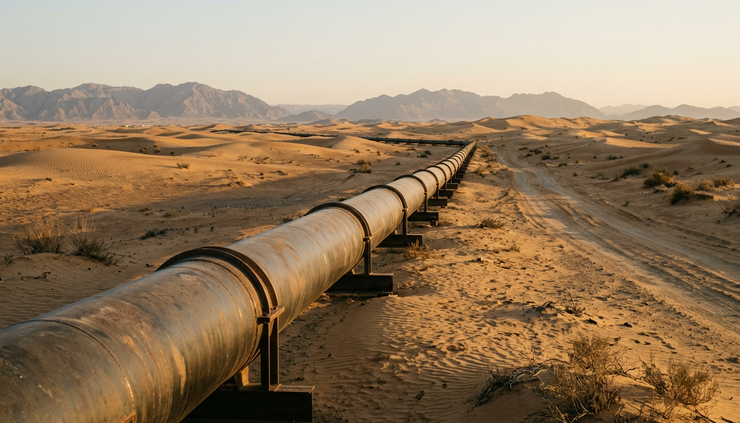
This is bigger than one pipeline.
The UAE isn’t just building a single backup route and calling it done. Ports, storage sites, roads, and transport links along the Gulf of Oman coastline all play a role.
Think of it like building a second entrance to a busy house. The old entrance still matters, but the second one reduces pressure when things get crowded or risky.
That’s especially useful for Dubai and the wider UAE, where trade routes matter almost as much as oil routes. Energy exports, cargo movement, and port access all become more secure when the country has more than one path to open water.

The timeline is gradual.
There’s one big detail to keep straight: this isn’t a sudden replacement for the Strait of Hormuz. Much of the work is being expanded in stages, with major pieces expected through 2027.
That makes the story less dramatic, but more realistic. Infrastructure takes time. Pipelines need capacity, ports need storage, and shipping networks need reliable access.

What it means for Hormuz
The Strait of Hormuz will still matter enormously. The UAE’s plan can reduce dependence, not erase it.
But if the expansion reaches its intended scale, the country gains something valuable: options. In a region where shipping lanes can become geopolitical pressure points overnight, that’s a serious advantage.
Original Broadcast: Dr. Steve Turley — “Dubai Has Built a NEW ROUTE to BYPASS the Strait of Hormuz!!!”
Original Organization/Creator: Dr. Steve Turley / Turley Talks
Additional reporting: Reuters reports that the UAE is accelerating construction of its West-East Pipeline, with operations expected in 2027.

Comments