

Delaware’s Nuclear Task Force Report: Big Meetings, No Plan, and a Light Bill to Match
Delaware’s Nuclear Energy Feasibility Task Force set out to answer a big question: could nuclear power help the state meet its future energy needs? After months of meetings and a final report, the answer appears to be, “Maybe, but please ask again after someone finds the steering wheel.”
The report is useful in one way. It confirms that nuclear energy, including newer small modular reactor designs, deserves serious discussion in Delaware. That matters because the state needs reliable power, cleaner generation, and some control over its own energy future.
The problem is that the final report stops well short of a plan. It points at the mountain, nods respectfully, then forgets to pack boots.
The task force studied the issue but did not land the plane.
Task forces are supposed to gather facts, hear from experts, and help lawmakers decide what comes next. By that basic standard, Delaware’s nuclear group did some real work. It held meetings, heard testimony, and produced a final report summarizing nuclear power's promise and challenges.
But the report does not answer the question residents and businesses actually care about: what happens now?
A final report on nuclear feasibility should ideally include a few clear items:
Which agency is responsible for next steps
What studies still need to happen
Where nuclear could fit into the grid
What kind of technology Delaware should evaluate
A rough timeline for decisions
A public engagement plan
Cost and financing questions to examine
Instead, the report reads more like a polite group project where everyone contributed a paragraph, but nobody wanted to be the person holding the stapler at the end.

Jeff Hilovsky’s op-ed points to the missing engine
State Rep. Jeff Hilovsky criticized the report in an op-ed, and his main points are hard to brush aside.
The biggest issue is the absence of a lead agency. Without one, responsibility floats around like a plastic bag in a parking lot. Everyone can support the idea in theory, but nobody owns the next step.
Hilovsky also highlighted the lack of a deployment timeline or action plan. That is not a minor paperwork issue. Nuclear projects, even smaller advanced designs, require years of planning, licensing, siting, financing, public review, and grid coordination. You cannot casually pencil one in between road resurfacing and budget hearings.
His comparison to Germany’s energy costs is also meant as a warning. Germany moved away from nuclear power and has faced high electricity costs and energy security pressure, especially during periods of fuel market stress. Delaware is not Germany, of course. Different grid, different politics, different scale. But the lesson still applies: when reliable generation disappears or never gets built, someone pays. Usually, that someone has a mailbox and an electric bill.
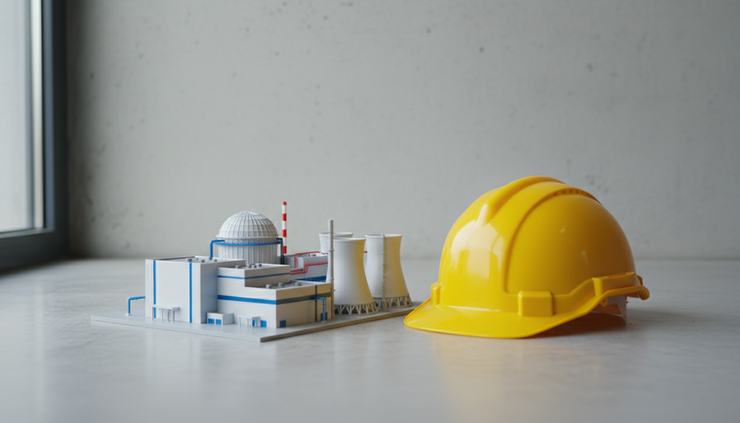
Imported electricity is not an energy strategy.
Delaware relies heavily on electricity generated outside its borders. That is not automatically bad. Regional power markets exist for a reason, and buying power from elsewhere can make sense.
Still, heavy reliance on imported electricity creates real risks.
Delaware has less control over prices, fuel mix, and long-term supply. If neighboring states face tight demand, plant retirements, transmission constraints, or policy changes, Delaware can feel the effects. It is a little like planning dinner by assuming the neighbor will always have extra lasagna. Nice when it works. Awkward when it doesn’t.
The state also has ambitious clean energy goals. Meeting those goals while keeping power reliable and affordable will require more than buying credits, hoping offshore wind arrives on schedule, or treating PJM grid imports as an invisible magic cord.
Nuclear may or may not be the right answer for Delaware. But if it is on the table, the state needs to treat it like infrastructure, not a book club topic.
Delaware needs a real next step.
A serious strategy wouldn't require approving a reactor tomorrow. It would simply move from conversation to decision-making.
That could mean assigning a lead agency, launching a formal cost and siting review, coordinating with regional grid planners, studying small modular reactor options, and creating a public process that explains tradeoffs in plain English.
Most of all, Delaware needs to decide what role nuclear should play, if any, in a broader power plan. The current report opens the door, then stands there admiring the hinges.

The takeaway is simple: Delaware’s Nuclear Energy Feasibility Task Force proved the topic is worth discussing. It did not prove the state knows what to do next.
For a state that imports much of its electricity and wants cleaner, reliable power, that is a problem. Meetings are fine. Reports are fine. But at some point, Delaware needs a plan with a name on it, a timeline attached, and enough detail to survive contact with reality.


Comments